
 LinkT&B Editorial Team
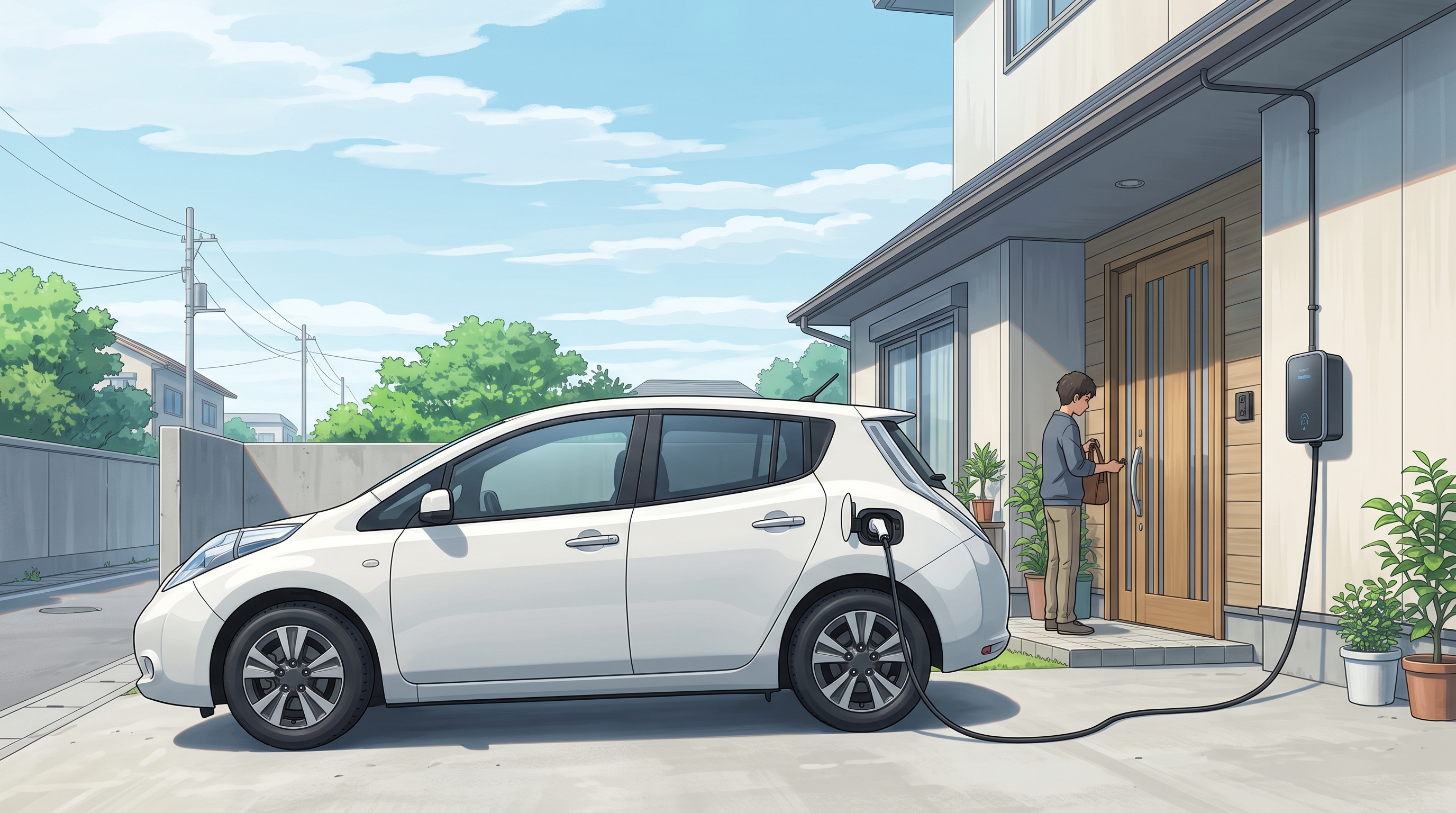
You want your home EV charger to be used only by cars belonging to family, friends and others you authorize. You also want to avoid switching a breaker or using an app each time. OneChargeKey identifies the vehicle and allows only registered cars to charge.
Contents
- Unauthorized EV charging from a home’s outdoor outlet was reported in the US
- OneChargeKey identifies registered cars and allows only those cars to charge
- Can OneChargeKey be added to your existing EV and charger?
- Home charging can reduce trips to chargers and let you plan around your electricity tariff
- LinkT&B proposes OneChargeKey installations suited to your charging equipment
- Sources and further reading
- Ask about a OneChargeKey demonstration or installation
Unauthorized EV charging from a home’s outdoor outlet was reported in the US
In July 2019, an EV was reported charging from a home’s outdoor outlet in Florida without the resident’s permission. Local television station WPBF reported that the resident noticed an unfamiliar car at his home and contacted police.[1]
If this happened at your home, you would be concerned not only about the electricity used but also about an unfamiliar car entering your property and using your equipment. Deciding which vehicles may charge when installing a charger lets family and friends use it while taking precautions against unauthorized use.
Just as a front door has a key, an EV charger can have a key that identifies which cars may use it. LinkT&B is developing OneChargeKey as that smart key for EV charging.
OneChargeKey identifies registered cars and allows only those cars to charge
OneChargeKey identifies the car connected to the charging cable. Linking that result to the charger’s controls allows only preregistered cars to charge. A family member can return home and plug in to begin charging, while an unregistered car is not supplied with power.
For example, you could register two family cars and one car belonging to a friend who visits regularly. Because OneChargeKey identifies those cars, the owner has fewer occasions to be present, unlock equipment or use an app for each session. Family and friends using an authorized car can plug in as usual.
Lighting and cameras can help you monitor the parking area, while OneChargeKey limits which cars may use the charger. Combining property monitoring with charger access control adds security measures to convenient home charging.
Can OneChargeKey be added to your existing EV and charger?
If you already use an EV and charger, you may want to prevent unauthorized use while keeping that equipment. LinkT&B can assess an installation that adds OneChargeKey vehicle identification to your existing setup.
LinkT&B checks the charger manufacturer and model, the installation and the vehicles you use, then explains the equipment and fitting method suited to that combination. This includes how identification connects to charger controls, so you can discuss an addition to existing equipment before deciding to replace your car or charger.
Home charging can reduce trips to chargers and let you plan around your electricity tariff
Plug in after returning home and replenish the next day’s driving energy while the car is parked. A home charger can reduce trips made solely to charge the vehicle and time spent waiting away from home.
Home charging also lets you plan around your electricity tariff. The US Department of Energy describes nighttime home charging as a way to use low, stable residential electricity rates. In Japan, comparing your home plan with the public services you normally use can help you choose a lower-cost daily charging routine.[2]
For example, assuming electricity costs ¥31/kWh, using 200 kWh from your home supply for charging in a month would cost ¥6,200. A time-of-use plan may also let you charge during cheaper hours. To include equipment and installation costs, use our EV and petrol-car cost comparison and enter your own electricity rate and installation estimate.
OneChargeKey supports this home-charging routine by allowing only authorized cars to charge. You can charge at home day to day and use chargers along the route on longer trips. Adding access control to the home charger helps combine convenience with peace of mind.
LinkT&B proposes OneChargeKey installations suited to your charging equipment
You may want only family and friends to use your charger, want to add OneChargeKey to existing equipment, or be planning home charging alongside an EV purchase. Tell us how you would like to use it.
If you already have a charger, send its manufacturer and model along with photos of the parking area. We will check the vehicles and installation, then explain the equipment to add and how it can be fitted. For a new charger, we also review the parking position and power supply, considering everyday usability and protection against unauthorized use together.
You can experience OneChargeKey at the LinkT&B R&D Center. Contact us if you would like to see how vehicle identification fits into charging before considering an installation.
Sources and further reading
Ask about a OneChargeKey demonstration or installation
Use the contact button below to tell us how you would like to use OneChargeKey or to request a demonstration at our R&D Center.