
 LinkT&B Editorial Department

Choose charging equipment around vehicle connectors, acceptance limits, parking duration and concurrent use. A high-rated charger cannot override the vehicle’s charging limit or the site’s available electrical capacity.
Contents
- Selecting power from parking patterns
- Current status of charging standards: CHAdeMO and NACS
- Popularity status of ultra-fast charging
- Issues with implementation in condominiums and housing complexes
- Practical application of V2H/V2G and power management
- Main subsidy systems for 2026
- Installation strategy for facility managers and companies
- Summary
- Please contact us
- Reference materials
- Related Articles
- Discuss your project
The year 2026 marks a turning point where the development of EV charging infrastructure will accelerate in order to achieve the Japanese government's goal of having 300,000 charging infrastructure by 2030. In addition to the expansion of the Ministry of Economy, Trade and Industry's “CEV Subsidy for Vehicles (Subsidy to Promote the Introduction of Clean Energy Vehicles)” and “Subsidy to Promote the Introduction of Charging and Filling Facilities,” major developments continue in both the technological and institutional aspects, such as the reorganization of charging standards, the practical application of ultra-fast charging, the expansion of commercially available V2H (Vehicle to Home) products, and the progress of V2G (Vehicle to Grid) demonstrations.
In this article, we will summarize the latest trends as of 2026 and explain the points that facility managers and companies considering introducing EVs should keep in mind.
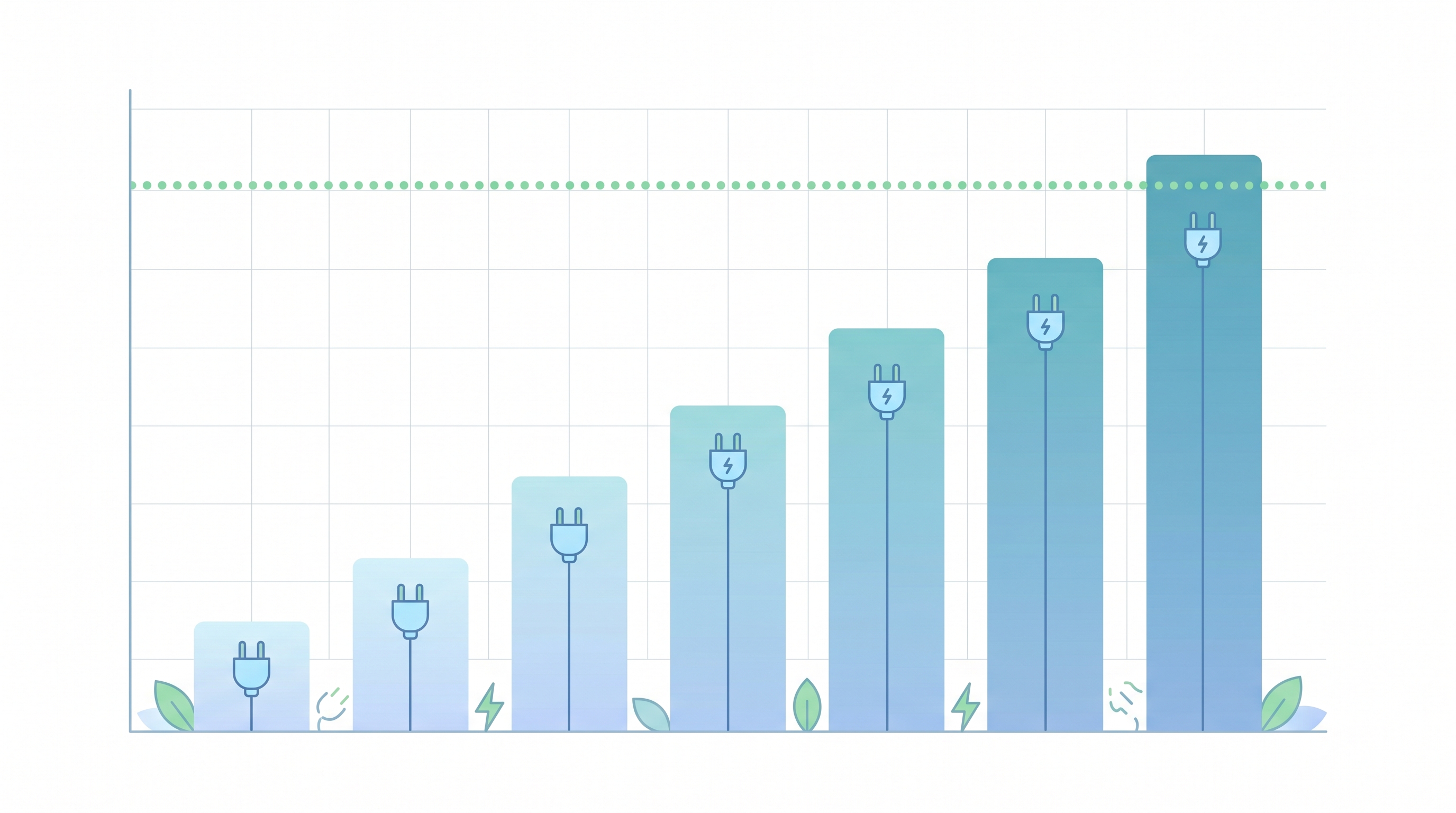
Figure 1. Trends in the number of installed EV chargers in Japan and 2030 target. From 2025 onwards, the pace of installation of fast chargers will accelerate.
Selecting power from parking patterns
| Item | What to check | How to assess it |
|---|---|---|
| Home or depot | Charging during long stays | Next-day energy and site capacity |
| Destination | Top-up during a visit | Stay length, tariff and turnover |
| En route | Charging during short stops | Vehicle acceptance, queues and alternatives |
Current status of charging standards: CHAdeMO and NACS
The CHAdeMO standard has been the mainstay of EV quick charging in Japan for many years, but NACS (North American Charging Standard, formerly the Tesla standard) is rapidly gaining ground, especially in North America. From 2025 to 2026, major manufacturers such as GM, Ford, Hyundai, BMW, and Mercedes announced and implemented NACS compatibility in their North American models, making NACS the de facto standard in the North American market (however, this is a trend in the North American market, and the situation is different in Japan and Europe).
As for the impact on the Japanese market, although CHAdeMO is still the mainstream at the moment, it will continue to be the first choice for new chargers in Japan, but for facilities that support North America, EVs visiting Japan, or are looking to expand in the future, it is worth considering multi-standard support including CCS and NACS. The CHAdeMO Council has also established a specification for the CHAdeMO 3.0 (ChaoJi) standard that supports up to 900kW (600A x 1.5kV), but this is the upper limit in the protocol, and as of 2026, compatible vehicles, chargers, and power receiving equipment are all limited. For the time being, the 150-350kW class will be the realistic introduction range. We are also moving towards ensuring interoperability between standards.
Popularity status of ultra-fast charging
In 2026, the installation of ultra-fast chargers with an output of 150kW or more has become noticeable. Chargers in the 90kW to 150kW range are being replaced one after another, mainly in expressway SAs/PAs, and some major SAs have begun plans to obtain certification and advance introduction of 350kW class batteries.
| Output band | Charging time (60kWh EV, 10→80%) | Trends in installation locations | Estimated installation cost (main unit + basic construction, before subsidy application) |
|---|---|---|---|
| 〜50kW | Approximately 60-80 minutes | Convenience store, roadside station | 2 million to 4 million yen |
| 50〜90kW | Approximately 40-60 minutes | Commercial facilities, SA/PA | 4 million to 8 million yen |
| 90〜150kW | Approximately 25-35 minutes | SA/PA, Dealer | 8 million to 15 million yen |
| 150〜350kW | Approximately 15-20 minutes | Main high-speed SA, dedicated station | 15-30 million yen |
*Charging time is an estimate under ideal conditions. The actual charging time will vary depending on the maximum power receiving capacity of the vehicle, battery temperature, SOC, simultaneous usage of the charger, etc. In particular, only a limited number of vehicles are compatible with the output range of 150kW or higher. The installation cost does not include high-voltage power receiving equipment (cubicle), lead-in work, underground installation, remote monitoring, and maintenance costs, and will vary greatly depending on the installation conditions.
While ultra-fast charging greatly improves user convenience, it often requires the reinforcement of power receiving equipment (cubicles), and infrastructure investment such as changing contracts with power companies and installing additional transformers is a bottleneck to its introduction.
Issues with implementation in condominiums and housing complexes
The introduction of charging equipment into apartment complexes is repeatedly pointed out as a bottleneck in the spread of EVs. It is relatively easy to install a standard 100V/200V charging outlet in a detached house, but in a condominium there are many non-technical hurdles, such as reaching a consensus with the management association, issues with electric capacity, and how to pay for the installation cost.
A solution that is attracting attention as of 2026 is the introduction of charge-based shared charging equipment. This is a model in which charging service providers install chargers in common areas of condominiums and users pay as they go, reducing the initial investment burden to the management association to zero or to a minimum. Your Stand, Ene Change, Terra Charge, and others are developing plans for apartment complexes, and by combining them with subsidies, the hurdles to introduction are lowering.
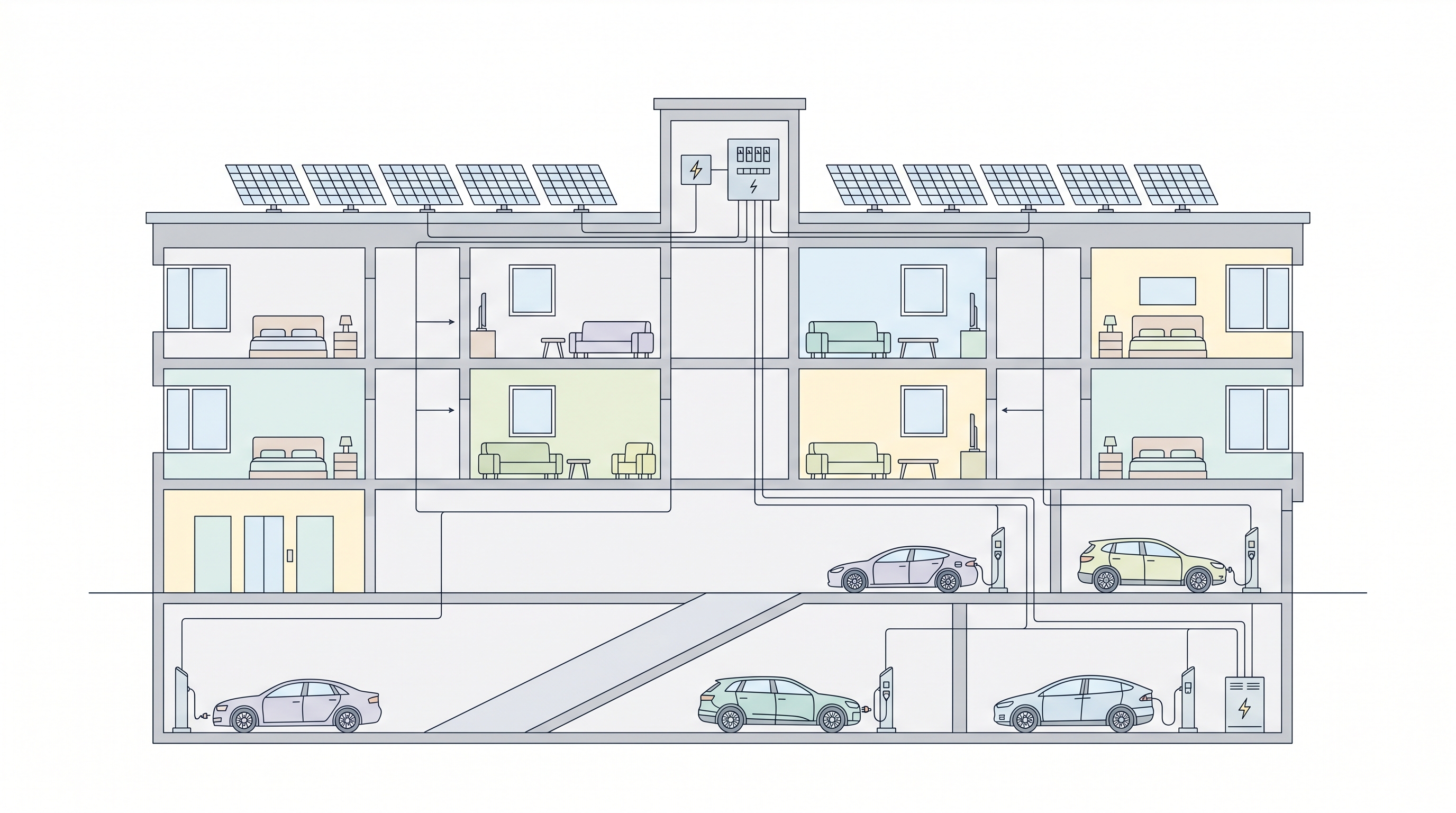
Figure 2. Introduction model of charging infrastructure for condominiums. The initial burden on the management association can be reduced by using billing services.
Practical application of V2H/V2G and power management
V2H (Vehicle to Home), which uses large-capacity EV batteries as home storage batteries, has already entered the practical stage with commercially available products. On the other hand, V2G (vehicle to grid), which reverses power flow to the power grid, is still in the stage of demonstration and institutional development, and the two are at different levels of maturity.
V2H charging and discharging equipment is already commercially available from Nichicon (EV Power Station, etc.) and Panasonic (V2H power storage system "eneplat", etc.), and they are being promoted as having the potential to reduce electricity costs when combined with solar power generation (the amount of reduction varies depending on PV capacity, electricity rate menu, EV usage frequency, and V2H equipment costs). While a typical household's daily electricity consumption is approximately 10 to 15 kWh, the latest EV batteries have a capacity of 60 to 100 kWh, so in theory they can cover several days' worth of household electricity.
V2G goes one step further and is a mechanism that allows EV battery power to flow backwards into the grid, which is used to adjust peak power supply and demand. In Japan, V2G demonstration experiments are progressing, with Tokyo Electric Power Company starting a V2G demonstration using EV/PHEV as a VPP resource in 2020, and Kansai Electric Power Company announcing a VPP demonstration using V2H/EV chargers in 2019, and participation in the supply and demand adjustment market through aggregators is also being considered. However, there are still issues that need to be resolved, such as developing technical standards for grid connection that accommodate reverse power flow and assessing the impact on battery deterioration.
Main subsidy systems for 2026
Subsidies to support the introduction of charging infrastructure continue to increase. The Ministry of Economy, Trade and Industry's "Subsidy to Promote the Introduction of Charging/Filling Equipment, etc." is a system that subsidizes a certain percentage of the charger itself and construction costs, and the budget has been secured for 2026 as well (the Next Generation Automobile Promotion Center is the application point). Please note that this is a separate system from the "Clean Energy Vehicle Introduction Promotion Subsidy (CEV Subsidy)" when purchasing a vehicle, so please be careful not to confuse it. Equipment eligible for subsidies, application counters, and acceptance periods may change each year.
When utilizing subsidies, it is important to pay attention to the application period and installation completion deadline. Every year, budgets are consumed at a rapid pace, and applications tend to be concentrated in the first half of the year. When considering introduction, it is important to coordinate with the construction company as early as possible and complete the estimate and on-site survey required for application.
Additionally, in many cases, local governments add their own subsidies, so checking in advance to see if they can be used in conjunction with national subsidies may further reduce implementation costs.
Installation strategy for facility managers and companies
Installing EV chargers should not be seen as a mere cost burden, but as a means of attracting customers and increasing the added value of the facility. For commercial facilities, hotels, and office buildings, we are entering an era in which the presence or absence of EV chargers will influence the facility selection of tenants and users.
The starting point for an installation strategy is to analyze the usage patterns of the facility. Normal charging (3 to 6kW) is often sufficient in facilities where the user stays for a long time (hotels, offices, commercial facilities), reducing the initial investment and the burden of power contracts. On the other hand, rapid charging is required in facilities where the stay is short (convenience stores, gas stations), but investment in power receiving equipment and running costs must be carefully estimated.
Summary
The EV charging infrastructure in 2026 will be at a stage where both quantitative expansion and qualitative evolution are progressing simultaneously. The diversification of standards complicates the decision to introduce one in the short term, but by choosing a charger that supports multiple standards, you can reduce future risks. While ultra-fast charging dramatically increases convenience, it is necessary to resolve issues with the power reception infrastructure. V2H/V2G is becoming a viable new option for power management.
The introduction of charging infrastructure has changed from "something we should do someday" to "something we should consider this year." With the subsidy system now available, now is the time to proceed with specific design and installation.
Please contact us
At LinkT&B, we offer one-stop services, from the design and construction of EV charging infrastructure to V2H/V2G system installation consulting. For help selecting chargers according to facility type, support for subsidy applications, and power contract optimization, please visit the EV charging solutions page or contact us directly from Contact Us.
Reference materials
- Ministry of Economy, Trade and Industry, "Guidelines for promoting the development of EV charging infrastructure" (300,000 units target in 2030)
- Next Generation Automobile Promotion Center, "Clean energy vehicle/charging infrastructure subsidy information"
- CHAdeMO Council, "CHAdeMO 3.0 / ChaoJi standard information"
- SAE International, "SAE J3400 (NACS) Standard Information"
- e-Mobility Power, "Fast charging service/next generation charger"
*The information in this article is as of April 2026. Details of policies, subsidies, and standards are subject to change, so please check each official website for the latest information.
Related Articles
Choosing a Power Electronics Development Partner in the SiC/GaN Era / FET Switching Noise: Causes and a Four-Layer Mitigation Approach
Further reading: e-Mobility Power: network and user information
Discuss your project
We help plan charging equipment, authentication and management around vehicle use and parking time. Tell us about your fleet and existing facilities.