
 LinkT&B Editorial Department
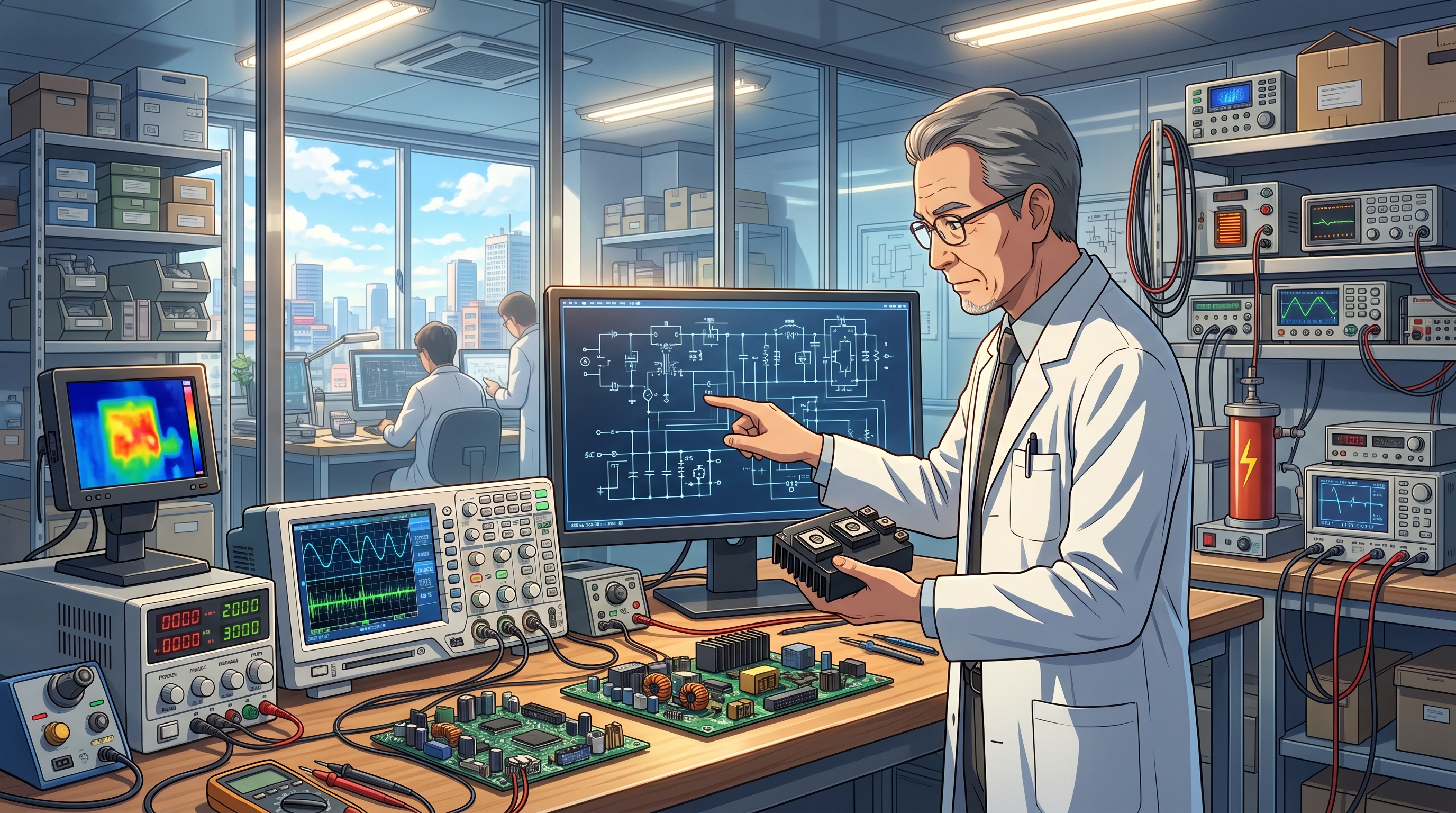
Outsourcing power electronics requires agreement on test conditions, measured data and production handover material as well as circuit schematics. Share voltage, load, cooling and applicable requirements to make quotations comparable.
Contents
- Scope to agree with a development partner
- Why is outsourcing of power electronics design increasing now?
- Five checkpoints that are often overlooked when choosing an outsourcing company
- Technical issues to pay special attention to in SiC/GaN design
- Why outsourcing “design only” is dangerous
- Summary: The key word when choosing a partner is “consistency”
- Please contact us
- Reference materials
- Related Articles
- Discuss your project
An increasing number of companies are outsourcing the design of power electronics. The background is the spread of next-generation power semiconductors such as SiC (silicon carbide) and GaN (gallium nitride). As the number of areas that cannot be covered using conventional Si (silicon)-based design know-how is expanding, companies that cannot maintain in-house specialized engineers are increasingly looking for contract development partners.
However, contracted development of power electronics is fundamentally different from outsourcing of web systems. For circuits that handle high voltages and large currents, a design error can directly lead to fire or destruction, so if you choose the wrong contractor, you will have to redo the prototype and delay obtaining safety authentication, which will significantly disrupt the schedule and cost of the entire project.
In this article, we will summarize the points to keep in mind when choosing an outsourcing company for power electronics design from the perspective of the field of contracted development.
Scope to agree with a development partner
| Item | What to check | How to assess it |
|---|---|---|
| Design | Circuit, PCB, control and enclosure | Responsibilities and interfaces |
| Validation | Normal, overload and fault conditions | Acceptance and safe test procedures |
| Handover | BOM, manufacturing files and software | Rights, version control and change support |
Why is outsourcing of power electronics design increasing now?
There are three main reasons why the need for outsourcing of power electronics design is increasing.
1. Increasing technical difficulty due to the rise of SiC/GaN
SiC MOSFETs have switching speeds more than 10 times faster than Si IGBTs and can significantly reduce losses. However, due to its speed, the gate drive design, board layout, and EMI countermeasures are all different from traditional Si designs. In environments where dv/dt reaches tens of kV/μs, differences in wiring length of several millimeters can greatly change noise characteristics, so the rules of thumb from the Si era cannot be applied as they are.
GaN devices are capable of higher frequency operation and contribute to the miniaturization of power supplies, but their gate breakdown voltage is low (maximum gate voltage is around 6V for many GaN HEMTs), and the design margin for the drive circuit is extremely narrow.
2. Demand for electrification in the automotive and industrial fields
Demand for power electronics design is expanding in all fields, including EV (electric vehicle) powertrains, on-board chargers (OBCs), DC-DC converters, and even power supplies for industrial motor drives and robots. The government's Semiconductor/Digital Industrial Strategy and GX (Green Transformation)-related policies are also supporting investment in domestic production facilities for power semiconductors, and expanding demand for EVs and storage batteries is further boosting demand for power electronics technology.
3. Lack of human resources
Since power electronics design spans multiple specialized fields such as electrical engineering, thermal design, EMC, and control theory, it generally takes several years to train engineers who can handle EMC, thermal design, and safety standards. Recruiting new graduates alone is not enough, and competition is fierce for mid-career recruitment of experienced people.
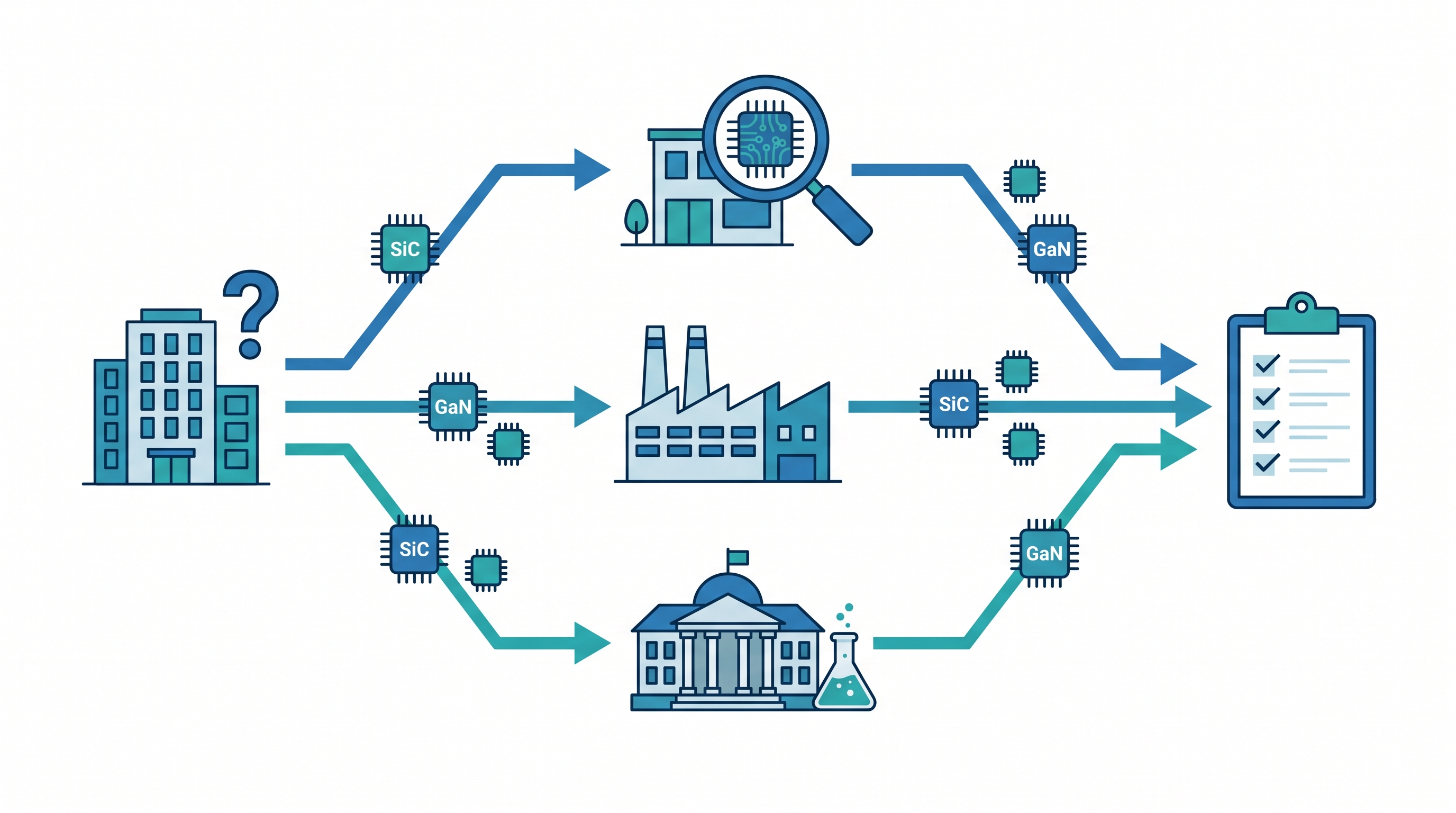
Figure 1. Expansion of power electronics design skills required in the SiC/GaN era. Compared to the Si era, issues specific to high-speed switching have increased.
Five checkpoints that are often overlooked when choosing an outsourcing company
Check 1: Do they have a track record of not only circuit design but also board design?
In the world of power electronics, even if the design is correct on the circuit diagram, the performance changes dramatically when the circuit board is laid out. Particularly in SiC/GaN circuits, layout techniques that minimize gate drive loop inductance are key to performance. If circuit design and board design are separated and ordered from separate companies, problems are likely to occur at this boundary.
Check 2: Do you have equipment for actual equipment evaluation and testing?
There is a difference between a simulation and a real machine. In particular, for EMI tests and surge tests, if you request a full-site evaluation or daily evaluation from an external testing organization, it will cost hundreds of thousands of yen and lead time of several weeks. If the outsourcing company has in-house testing facilities, the cycle of design, prototyping, evaluation, and modification can be completed quickly.
Check 3: Do you have knowledge of safety standards and authentications?
Many safety standards are required for power electronics products, such as component selection and ISO 26262 (functional safety) that comply with AEC-Q100/101 etc. for automotive applications, IEC 62477-1 and IEC 61800 series for industrial equipment, and IEC 62368-1 and UL standards depending on the application. If standard requirements are not incorporated in the design stage, the worst-case scenario will be failure of the authentication test and re-design.
Check 4: Compatible range of thermal design
Most of the loss in power circuits is heat. Although SiC devices are highly efficient, kW-class power supplies generate losses of several tens of watts, and if the heat dissipation design is inadequate, the junction temperature will exceed the allowable value and the lifespan will be drastically shortened. It is important to be able to consistently handle everything from thermal simulation (FEM analysis) to heat dissipation structure design and temperature verification through actual measurements.
Check 5: Consistency from prototype to mass production transfer
The prototype worked, but when it went into mass production, the defective rate skyrocketed - this failure tends to occur when the manufacturing partners for the prototype and mass production are different. By choosing a subcontractor that can select parts with an eye toward mass production from the design stage (including measures for discontinuation), standardize manufacturing conditions, and establish inspection standards, you can significantly reduce the risk of transferring mass production.
Technical issues to pay special attention to in SiC/GaN design
| Challenge | Si era | SiC/GaN era | influence |
|---|---|---|---|
| switching speed | ~100ns | ~10ns | EMI increase, gate ringing |
| dv/dt | ~5kV/μs | Several tens of kV/μs class (varies depending on conditions) | Dielectric breakdown, common mode noise |
| gate drive | ±15V, large margin | SiC: +18~20V on/0~-5V off, etc., GaN: 0~6V (product dependent) | Minimal design margin |
| board layout | relatively tolerant | A few mm determines performance | Large influence of parasitic inductance |
| thermal design | Large chip area → easy heat dissipation | Smaller chip → increased heat density | Increasing difficulty in heat dissipation design |
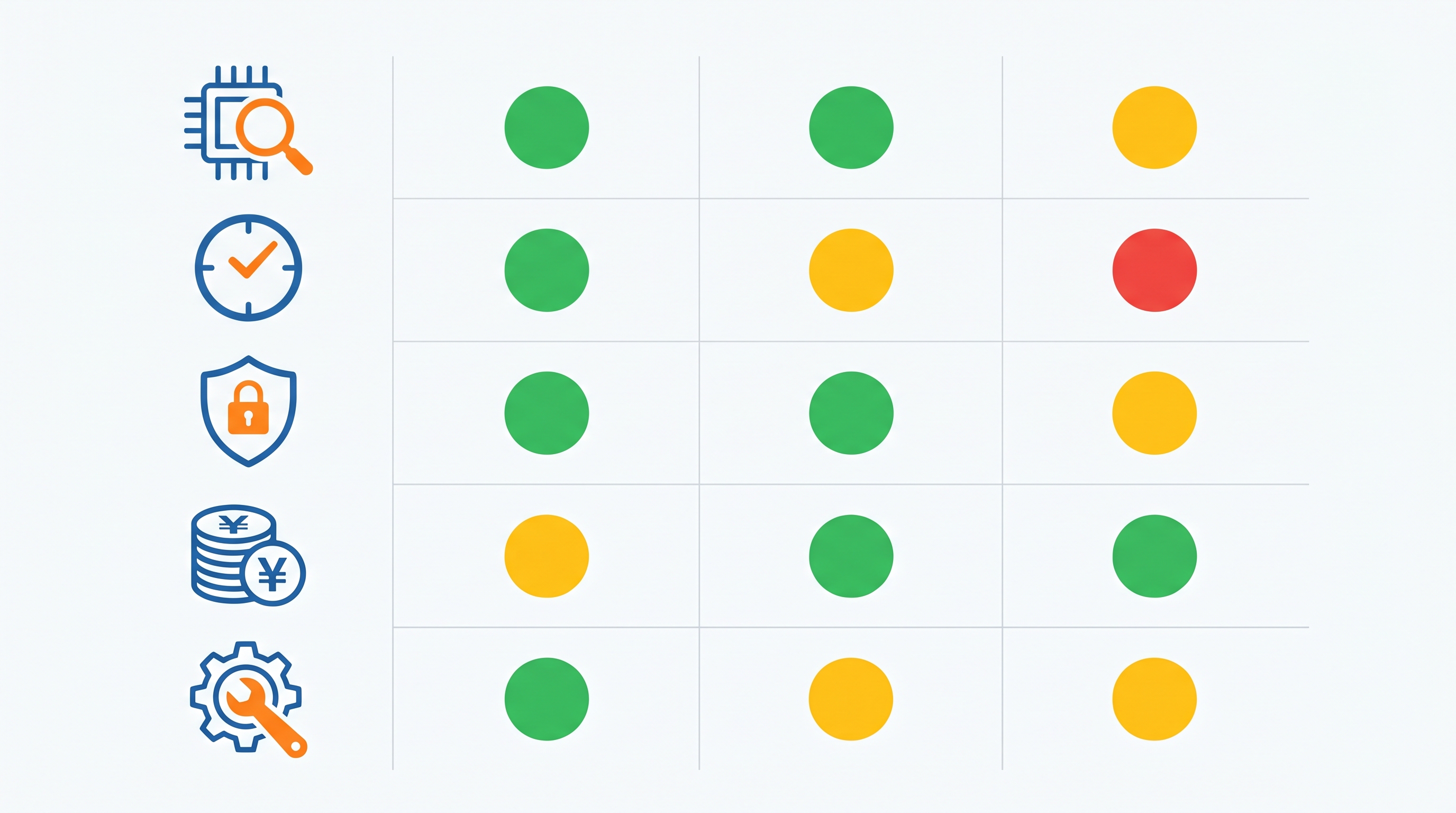
Figure 2. Outsourcing evaluation checklist for power electronics design. Success or failure is determined not only by technical ability but also by the presence or absence of an integrated system.
Why outsourcing “design only” is dangerous
The most important thing to avoid when contracting power electronics development is to isolate only the design phase and outsource it. In the sequence of circuit design → board design → prototype production → evaluation → authentication → preparation for mass production, each phase is closely dependent. Without a system in which designers can check evaluation results in real time and make immediate corrections, the cost of rework between phases would be enormous.
Particularly in SiC/GaN circuits, the influence of parasitic parameters that cannot be predicted by simulation alone is significant, so it is essential to have an environment that allows for rapid iteration from prototyping to actual measurement to modification. The success or failure of a project depends on whether the design and evaluation teams are on the same team.
Summary: The key word when choosing a partner is “consistency”
Here is a summary of points to consider when choosing an outsourcing company for power electronics design. Technical skills are of course important, but the most important thing is consistency. Is it possible for the same team to take responsibility for everything from circuit design to board design, prototype evaluation, authentication support, and mass production transfer? This is the most important point to avoid failure when outsourcing power electronics in the SiC/GaN era.
Please contact us
LinkT&B handles contract designs for SiC/GaN compatible DC-DC converters, in-vehicle power supplies, and motor drive circuits. We can provide one-stop support from circuit design to board layout, prototype evaluation, and thermal design. If you are considering outsourcing your power electronics design, please visit the R&D/Power Electronics Business page or contact us via Contact Us.
Reference materials
- Ministry of Economy, Trade and Industry “Semiconductor/Digital Industrial Strategy”
- ISO「ISO 26262 — Road vehicles — Functional safety」
- IEC「IEC 62477-1 — Safety requirements for power electronic converter systems」
- AEC「AEC-Q100/Q101 Qualification Standards」
Related Articles
SiC MOSFETs in 2026: Technology Trends and Selection Criteria / Motor Technology Trends: Choosing the Right Motor for Your Application / Managing Heat and Noise with Embedded Power Semiconductor Substrates
Discuss your project
We support circuit design, prototyping and hardware testing. Tell us about the operating conditions and the problem you need to investigate.